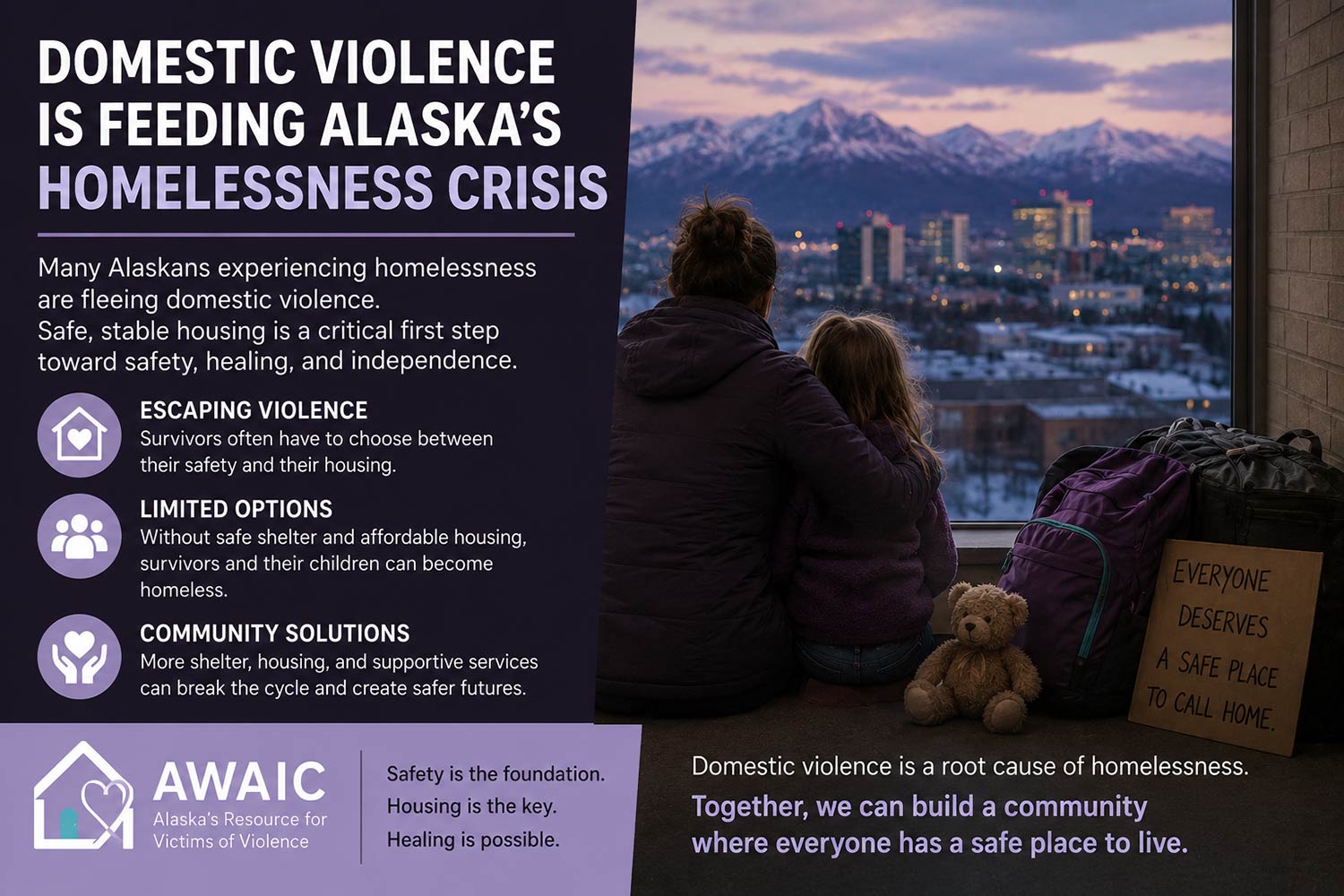
Domestic violence is one of the forces contributing to Alaska’s homelessness crisis. For many survivors, leaving an abusive relationship means leaving behind housing, financial stability, belongings, transportation, community support, and sometimes even personal documents.
That choice is never simple. Survivors may be forced to decide between staying in a dangerous situation or stepping into uncertainty with nowhere safe to go.
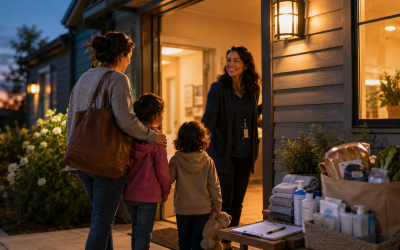
For survivors with children, the barriers can be even greater. A parent fleeing violence may need immediate shelter, long-term housing, school stability for their children, transportation, childcare, legal support, and trauma-informed advocacy — all at the same time.
Leaving Violence Can Mean Losing Housing
Abuse often includes more than physical violence. Many survivors also experience financial control, isolation, threats, stalking, and barriers to employment or transportation. An abusive partner may control access to money, housing documents, identification, bank accounts, or the family vehicle.
When a survivor leaves, they may not have the resources needed to secure a new place to live. They may have damaged credit, limited income, safety concerns, or rental history tied to the abusive relationship.
As a result, domestic violence can become a direct pathway into homelessness.
Shelter Capacity Is Tied to Housing Availability
Emergency shelters play a critical role in helping survivors reach immediate safety. But shelters are not meant to be the final step. Survivors also need pathways into stable, affordable housing so they can continue rebuilding their lives.
When housing is scarce or unaffordable, survivors may need to stay in shelter longer. This can reduce the number of beds available for others who are in immediate danger and trying to escape violence.
In other words, the housing crisis affects every part of the response system. It impacts survivors seeking emergency shelter, families trying to transition into long-term stability, and advocates working to keep services available.
Safety Requires More Than a Bed
A safe place to sleep is essential, but survivor safety requires more than a temporary bed. Survivors may need help creating safety plans, applying for housing, replacing documents, accessing benefits, navigating legal systems, finding employment, and supporting children through trauma.
Housing stability is part of healing. When survivors have a safe and reliable place to live, they are better able to focus on recovery, parenting, work, school, legal needs, and long-term independence.
Without stable housing, the risk of returning to an unsafe situation can increase.
Alaska Needs Coordinated Solutions
Domestic violence and homelessness cannot be solved in isolation. They are connected issues that require coordinated solutions across housing, public safety, behavioral health, victim services, legal advocacy, and community support.
That means investing in emergency shelters, transitional housing, affordable housing, prevention programs, and advocacy services. It also means recognizing that survivors may face unique barriers when trying to access housing, especially if abuse has affected their finances, documentation, rental history, or sense of safety.
Communities are stronger when survivors have real options.
AWAIC’s Role in Safety and Stability
AWAIC provides critical support for people impacted by domestic violence, including emergency shelter, advocacy, safety planning, and connections to resources. This work is part of a larger community effort to help survivors move from crisis toward safety and stability.
For many survivors, the first step is simply having a safe place to go. From there, advocates can help identify next steps, explore options, and support each person’s path forward.
Every survivor’s situation is different, and every path to safety looks different. What remains constant is the need for compassionate, accessible, and stable support.
Housing Is Prevention
When survivors have access to safe, stable housing, they are better protected from further harm. Housing can reduce the pressure to return to an abusive partner, support long-term independence, and help families begin healing.
Addressing homelessness in Alaska must include addressing domestic violence. Likewise, addressing domestic violence must include housing solutions.
Safety begins with having somewhere safe to go — and a future where survivors and their children can live free from violence.