For survivors of domestic violence, safety does not always end when they leave an abusive situation. In many cases, the need for protection continues long after someone has found shelter, relocated, or begun rebuilding their life.
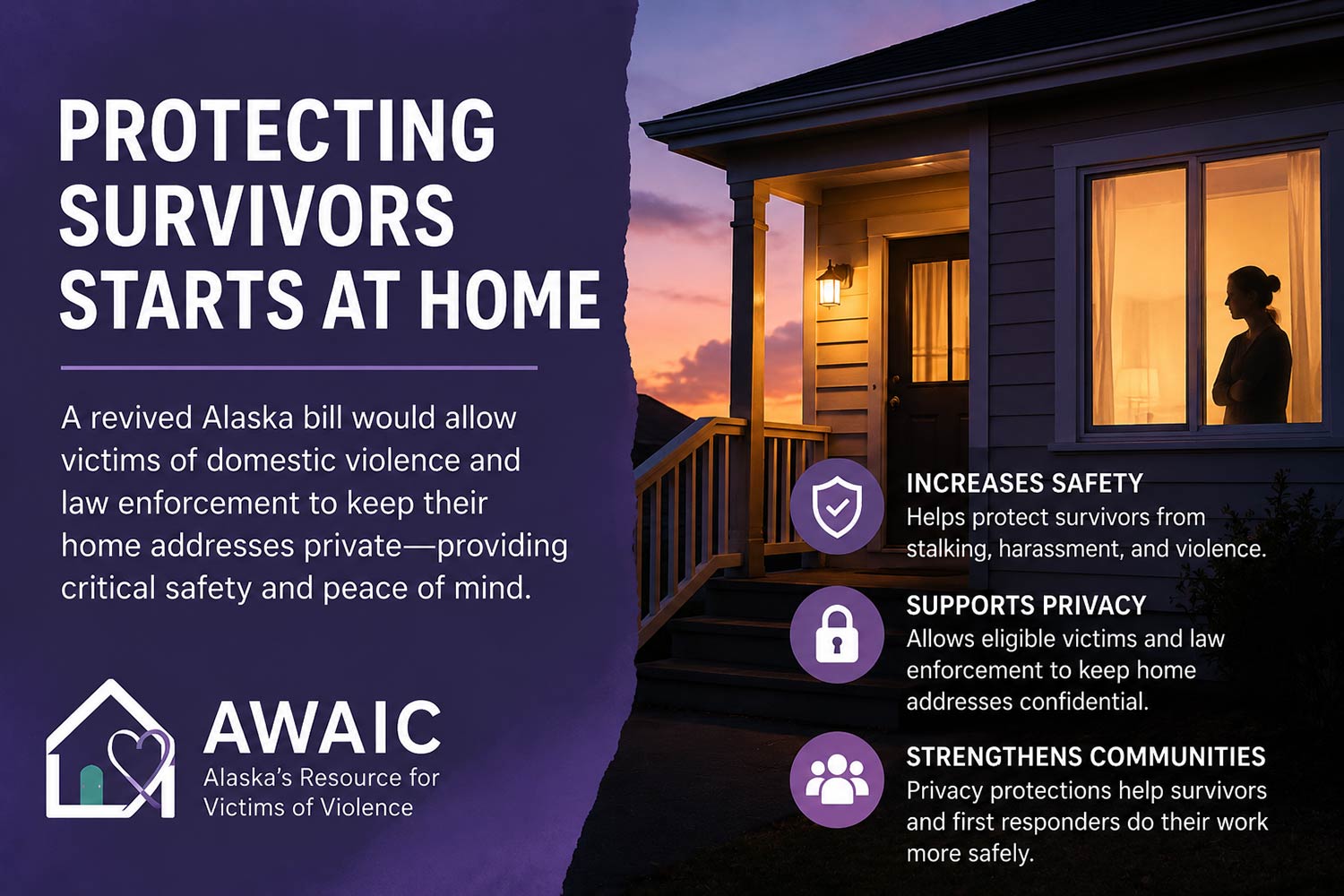
A revived Alaska bill would help address one important part of that safety: keeping home addresses private for victims of domestic violence and other qualifying crimes, as well as for law enforcement officers.
For survivors, privacy can be a matter of safety. When an abuser, stalker, or dangerous individual can locate a survivor’s home address through public records, the risk of harassment, intimidation, or further violence can continue. Address confidentiality laws are designed to reduce that risk by giving eligible individuals a safer way to receive mail and interact with public systems without exposing where they live.
Why Address Privacy Matters
Leaving an abusive relationship can be one of the most dangerous times for a survivor. Even after physical separation, an abuser may continue to use stalking, threats, surveillance, legal filings, or public information to regain control.
A private address can help create distance. It can help survivors feel safer at home. It can also reduce the chance that a shelter, transitional housing location, or new residence becomes a target.
For domestic violence programs, confidentiality is already central to survivor safety. Shelters and advocates work carefully to protect identifying information, locations, and communication details. Stronger address confidentiality protections would extend that safety into more areas of a survivor’s life.
A Practical Tool for Long-Term Safety
Address confidentiality programs do not solve domestic violence on their own, but they can be an important part of a broader safety plan.
For someone rebuilding after abuse, privacy may support their ability to find housing, enroll children in school, access services, maintain employment, or participate in legal proceedings with less fear of being located.
These protections can be especially important for survivors facing stalking, coercive control, or ongoing threats. When a person’s location is exposed, the danger can follow them. When privacy is protected, survivors may have more space to heal and move forward.
Protecting Shelters and Service Providers
Address confidentiality can also help protect the organizations and people who support survivors. Domestic violence shelters must remain safe and secure spaces. When shelter locations, staff information, or survivor addresses become accessible, it can create real risks for residents, advocates, and the broader community.
AWAIC and other survivor-serving organizations understand how critical confidentiality is to safety. Advocates often work with survivors who are navigating immediate danger, ongoing threats, and complex systems. Strong privacy protections help reinforce the safety measures already used by shelters and service providers.
Safety Requires Systems That Understand Risk
Domestic violence is not only physical violence. It can include intimidation, stalking, financial control, threats, isolation, and repeated attempts to monitor or locate a survivor. Public systems should recognize these realities and help reduce unnecessary exposure.
When laws allow survivors to keep their home addresses private, they acknowledge that privacy is not a convenience. It is a safety measure.
Survivors should not have to choose between accessing public services and protecting their location. They should not have to risk being found simply because they are participating in systems meant to help them move forward.
Supporting Survivor-Centered Policy
Policies that protect survivor confidentiality are an important part of building safer communities. They help reduce barriers, strengthen safety planning, and send a clear message that survivors deserve protection beyond the moment of crisis.
AWAIC supports efforts that make it safer for survivors to seek help, rebuild stability, and live free from violence.
Protecting a survivor’s address may seem like a small step, but for someone trying to stay safe, it can make a meaningful difference.
Moving Toward Safer Communities
Every survivor’s situation is different, and every safety plan must reflect the specific risks they face. But strong privacy protections give survivors and advocates another tool to reduce danger and support long-term stability.
As Alaska considers address confidentiality protections, it is important to keep survivor safety at the center of the conversation.
When we protect privacy, we help protect lives.