Domestic violence shelters and advocacy organizations across Alaska are facing a serious and immediate concern: uncertainty around federal funding could force some providers to reduce services, cut programs, or close entirely.
For organizations serving survivors of domestic violence, funding is not just a budget issue. It determines whether a shelter can remain staffed, whether a crisis line can be answered, whether safe housing is available, and whether survivors have somewhere to turn when they are fleeing danger.
For AWAIC, Alaska’s largest domestic violence shelter, the concern is urgent. According to reporting from the Anchorage Daily News, approximately 71% of AWAIC’s funding comes through the federal government, either directly through grants or through pass-through funds distributed by the state. With some expected grant opportunities disappearing or remaining uncertain, organizations like AWAIC are being forced to consider what happens if critical support does not come through.
Survivors Need Services They Can Count On
Alaska continues to face some of the highest rates of domestic violence and sexual assault in the nation. Survivors in crisis need immediate access to safety, shelter, advocacy, and support. Those needs do not pause during grant delays, political transitions, or funding uncertainty.
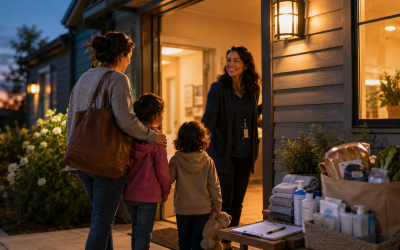
When someone is escaping abuse, they may need a safe place to stay that same night. They may need help safety planning, transportation support, legal advocacy, basic supplies, housing assistance, or emotional support from trained advocates.
These services require consistent funding. They require trained staff. They require secure facilities. They require operational stability.
Without that foundation, survivors and families may face fewer options at the very moment they are most at risk.
Programs at Risk
The article highlights two AWAIC programs that could be threatened if the funding picture does not improve: Willa’s Way and Harmony House.
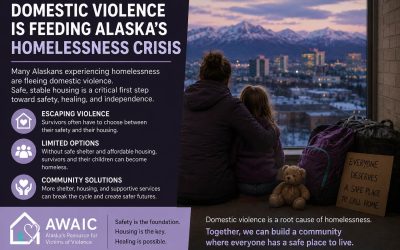
Willa’s Way provides safe housing for Alaska Native women and children who are experiencing homelessness due to domestic violence. Harmony House offers transitional living support for women fleeing domestic violence, including access to low-cost housing for up to two years.
Programs like these are critical because leaving an abusive situation is often not a single moment. It is a process. Survivors may need emergency shelter first, followed by longer-term housing, advocacy, employment support, legal resources, and time to rebuild stability.
When transitional housing programs are cut, survivors may be left with fewer pathways from immediate safety to long-term independence.
Rural Communities Face Added Risk
Funding uncertainty also has serious implications for smaller and rural programs across Alaska. The article notes concerns from Seward Safe Harbor, which assists survivors in Seward, Moose Pass, Cooper Landing, and Hope.
For smaller communities, the loss of a local domestic violence program can create dangerous gaps. Survivors may be forced to travel to Anchorage, Kenai, or another community to report abuse or access services. For someone fleeing violence, that distance can be a major barrier.
It can also mean that some survivors do not report abuse at all.
Local services matter because survivors deserve help that is accessible, timely, and connected to the realities of their community.
Domestic Violence Services Are Essential Infrastructure
Domestic violence shelters are often described as nonprofit services, but they function as essential public safety infrastructure. They help prevent further harm, support families in crisis, reduce barriers to safety, and provide a critical link between survivors and the systems that can help protect them.
A staffed shelter can be the difference between danger and safety. Transitional housing can be the difference between returning to an abusive environment and building a new future. Advocacy can be the difference between feeling trapped and understanding available options.
These services are not optional. They are lifesaving.
Stability Must Be a Priority
Federal funding uncertainty places an enormous burden on organizations already responding to urgent community needs. While nonprofits work hard to diversify funding, build partnerships, and stretch every available dollar, the scale of domestic violence response in Alaska requires reliable public investment.
Survivors should not have to wonder whether services will still exist when they are ready to ask for help. Advocates should not have to choose which critical program can survive. Communities should not have to lose local safety resources because of unstable funding systems.
AWAIC remains committed to supporting survivors, strengthening safety, and advocating for the resources needed to keep essential services available.
How the Community Can Help
Community support matters now more than ever. Individuals, businesses, foundations, and public partners all have a role to play in sustaining domestic violence services in Alaska.
You can help by learning more, donating, volunteering, sharing resources, and speaking up for stable funding for survivor services.
When we invest in domestic violence shelters and advocacy programs, we invest in safety, stability, and the well-being of our entire community.