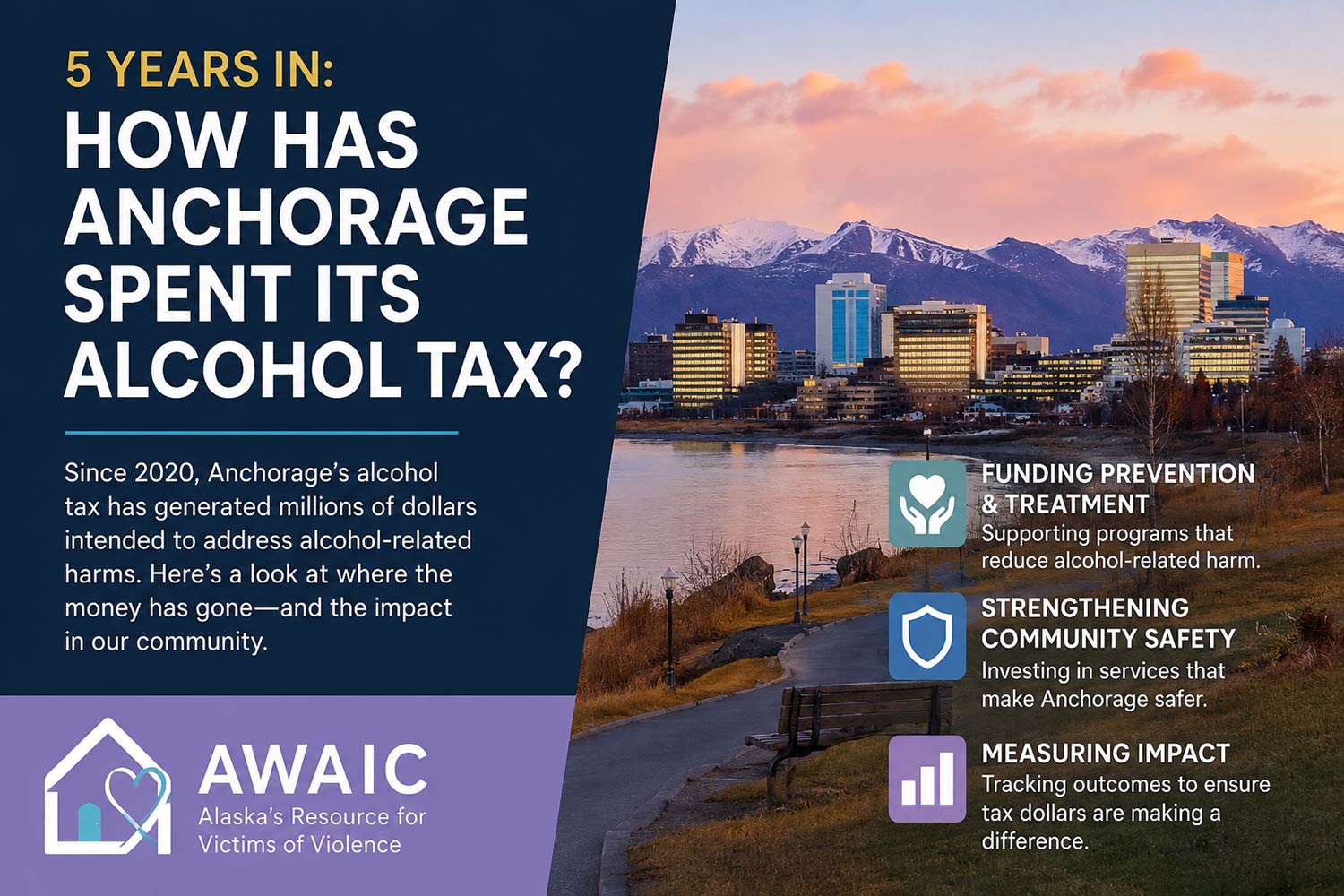
Five years after Anchorage voters approved a local alcohol tax, the conversation around how those dollars are spent continues to matter deeply for organizations serving people in crisis.
The tax was created with a clear purpose: to support public safety, prevent domestic violence and child abuse, expand substance misuse treatment, and address homelessness. For organizations like AWAIC, that funding is not abstract. It helps keep essential services available for survivors of domestic violence when they need safety, shelter, and support.
According to reporting from Alaska Public Media, much of Anchorage’s alcohol tax revenue has been used to help replace lost federal and state funding for local service providers. City officials described that support as necessary to keep community services afloat during a time of high need and reduced outside funding.
Keeping Shelter Services Available
AWAIC was specifically identified as one of the organizations receiving alcohol tax support. The article reported that AWAIC receives about $225,000 annually from the tax, and that without that funding, the organization would face difficult decisions around shelter staffing.
That matters because staffing is central to safety. A domestic violence shelter is not simply a building. It is a secure, staffed, trauma-informed environment where survivors can access immediate support, advocacy, planning, and connection to resources.
When funding is reduced, capacity can be reduced. When capacity is reduced, more people may be turned away at the very moment they are trying to escape violence.
Public Safety Includes Survivor Support
Discussions about public safety often focus on emergency response, enforcement, or visible crisis intervention. Those pieces matter, but public safety also includes prevention, shelter, advocacy, counseling, and long-term stabilization.
For survivors of domestic violence, safety may begin with a confidential conversation. It may begin with a shelter bed. It may begin with someone answering the phone, helping create a safety plan, or making sure children have a safe place to sleep.
Alcohol tax funding helps support the local network of services that respond to these needs. It is one piece of a larger community safety system.
Prevention and Crisis Response Must Work Together
The article also raises an important tension: how to balance immediate crisis needs with long-term prevention. Anchorage faces urgent needs today, including homelessness, violence, substance misuse, and gaps in behavioral health support. At the same time, prevention work is essential if the community wants to reduce harm in the future.
For survivor-serving organizations, both are necessary.
People in danger need help now. Communities also need prevention education, stable housing pathways, substance misuse support, child abuse prevention, and coordinated services that reduce the likelihood of future harm.
Funding decisions should recognize that crisis response and prevention are not competing priorities. They are connected.
Stable Funding Protects the Core Mission
AWAIC’s work depends on consistent support. Grants and public funding can help sustain critical services, but they are often uncertain, restricted, or vulnerable to policy changes. When federal or state funding shifts, local organizations must find ways to continue meeting community needs without interruption.
That is why local investment matters.
Reliable community-based funding helps preserve shelter capacity, retain trained staff, and maintain essential services for survivors and families. It also gives organizations more stability as they plan for the future.
A Community Responsibility
The question of how Anchorage spends its alcohol tax is ultimately a question about community priorities. When public dollars are directed toward services that protect survivors, support children, prevent harm, and address crisis, they become an investment in a safer city.
For AWAIC, this support helps sustain the daily work of providing safety and advocacy for people affected by domestic violence.
Survivors deserve more than temporary solutions. They deserve stable, accessible, and well-supported services when they are ready to seek help.